
How Lease Guarantor Programs Work
- Fee: usually about 70% to 110% of one month's rent (roughly 6% to 9% of a year's rent), paid up front
- Timing: paid on top of your deposit and first month’s rent
- Underwriting (their own approval check): each company sets its own income and credit bar, and we compare your numbers with it before you apply
- Coverage: they cosign the lease. If you miss rent, the guarantor pays the landlord and comes after you.
Providers in Texas:
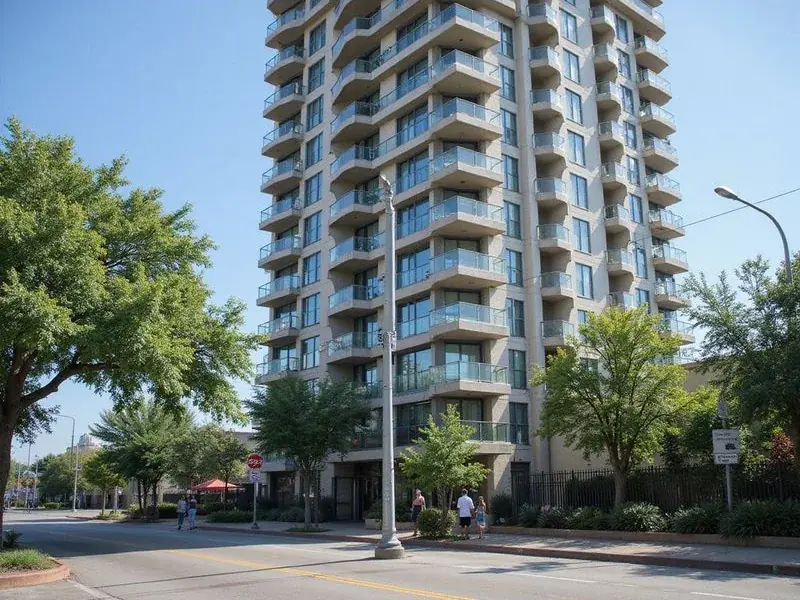
- TheGuarantors: common in Dallas Uptown high rises and mid rise buildings around the Houston Galleria
- OneApp: is a guarantor service some Texas communities accept, so ask us which ones before you apply
- Smaller programs: a few communities use other cosigning programs to approve renters they’d otherwise turn down
Not every community accepts every provider. We track which ones each community tells us it takes, and we call again when an answer isn't clear.
What a Guarantor Fixes and What It Doesn't
They solve: financial risk. Bad credit, no credit history, not enough income (the guarantor covers the gap), and no US credit file.
They don’t solve: rental history and background problems. Guarantor companies don’t cover evictions, broken leases, or criminal records. Some Texas communities accept a guarantor for credit issues but still deny for an eviction. Others accept it for both, so the community you pick matters.
Read our guarantor vs. deposit vs. cosigner comparison for the full breakdown.
What You Pay Up Front With a Guarantor
On a $1,500/month unit, moving in with a guarantor usually looks like this:
- Guarantor fee: $1,050 to $1,650
- Security deposit: $500 to $1,500 (varies)
- First month’s rent: $1,500
- Application/admin fees: $50 to $200
Total upfront: $3,100 to $4,850
We run this math for your specific unit before you commit. Use our rent affordability calculator to figure out your target rent first.
How We Look for Communities That Take Your Provider
We track which communities accept which providers (TheGuarantors, OneApp and others) across all five Texas metros. That goes for a Dallas Uptown high rise, a mid rise near Houston's Texas Medical Center, or a garden style apartment in San Antonio. First we go over the guarantor’s posted requirements with you. The provider decides if you qualify. Then we walk you through the total upfront cost and point you to communities that take a guarantor in place of their credit minimum.
How We Compare
| Feature | Typical Apartment Locator | No Credit Check Apartments |
|---|---|---|
| Guarantor provider matching | Generic referral | Tracks which communities take TheGuarantors, OneApp and smaller programs |
| Checking if you qualify | Not offered | Income multiple checked before you apply |
| Total upfront cost breakdown | Not calculated | Guarantor fee + deposit + first month added up before you commit |
| Credit problems vs. eviction problems | Treated the same | Knows which communities accept guarantors for credit only vs. credit and evictions |
| Cost to renters | Varies | 100% free. Communities pay the referral fee |
When a Larger Deposit Costs Less
Sometimes a larger deposit, a risk fee, or a personal cosigner is the cheaper route. On a $1,100 unit in Arlington or New Braunfels, a guarantor fee runs roughly $770 to $1,210. An extra $500 deposit, which you may get back, or a one time risk fee often costs less. If it does, we'll say so.
See If You Qualify for a Guarantor
- The rent you're aiming for and which metro
- Annual income (each provider sets its own bar)
- How steady your job is
- Which screening problem has you looking at a guarantor
We go over guarantor requirements with you and send you Texas communities to look at, free. The provider and the property each make their own decision.